









Win an XM WX Satellite Weather receiver from WxWorx as we continue the celebration of AVweb's 15th Anniversary! All you have to do is click here to enter your name and e-mail address. (You only have to enter once, and you'll be entered in our prize drawings for the entire year — so if you've already entered, you're all set.)And no, we're not going to rent or sell your name, ever. Tell your friends, and invite them to sign up for AVweb so they can qualify for our 15 Grand Giveaways prize drawings, too. (We won't spam them, either — but we hope they will sign up for our newsletters.)Deadline for entries is 11:59pm Zulu time April 9, 2010.Click here to read the contest rules and enter.Congratulations to Colleen Keller of San Diego, California, who won a Garmin 510 aera handheld GPS in our last drawing! (click here to get your own Garmin aera)
The pilot of a Lancair that was spewing oil made a safe emergency landing on a beach in Hilton Head, S.C., about 6 p.m. on Monday, but a 38-year-old man who was jogging along the shore was struck from behind and killed. The pilot of the Lancair IV-P, an experimental airplane, was en route from Orlando, Fla., to Norfolk, Va., with one passenger on board at about 13,000 feet, when the engine began to leak oil, obscuring the windshield. At some point the propeller was lost -- some reports said it came off in flight, others said during the landing. The two men on board the airplane were not harmed. News photos show the intact Lancair in the water up to its belly. The jogger, who was listening to an iPod, was identified by the Associated Press as Robert Jones of Woodstock, Ga.
Bills are now under consideration in both the House and Senate to amend a recent FAA policy that restricts airport access. The "Community Airport Access and Protection Act of 2010" addresses the FAA's decision to prohibit "through the fence" access at most public airports. Such access has long been enjoyed by owners of hangar homes and other neighbors who use airports on a regular basis. "Please contact your senators and representatives to support these bills," Brent Blue wrote to AVweb this week. Blue founded a group called Through The Fence to organize opposition to the policy. "No data, studies, or non-FAA-personnel's opinion went into the new order," which was issued last September without any input from the public or advocacy groups, says Blue. Through The Fence is encouraging all pilots and others interested in general aviation airports to contact their senators and representatives to support this legislation.
Two major aviation awards programs have announced their winners for 2010. The Lindbergh Award, which honors efforts to achieve a balance of nature and technology, went to FedEx and to Jack Pelton, CEO of Cessna. "Jack Pelton has led the charge to see that the aviation industry focuses appropriate efforts in reducing its environmental impact," said Larry Williams, chairman of the Lindbergh Foundation. FedEx will receive the Corporate Award for Balance, which recognizes business practices that reflect concern for the environment and quality of life. The FAA's General Aviation Awards go to aviation professionals for contributions in flight instruction, aviation maintenance, avionics, and safety. Recipients of this year's national awards are Jeff Moss of Los Angeles, CFI of the Year; Tom Turner of Rose Hill, Kan., FAA Safety Team Representative of the Year; Neil Nederfield of Lafayette, N.J., Aviation Maintenance Technician of the Year; and Kirk Peterson of Larimore, N.D., Avionics Technician of the Year.
Overheard in IFR Magazine's "On the Air"During my IFR training at Duluth (Minnesota) International Airport, I'd just declared a missed approach. Here's the exchange I had with ATC:Tower:"Cessna One Two Three Four Alpha: Fly heading of zero niner zero. Climb and maintain 3,200."Me:"Zero niner zero, climb and maintain 2,200."Tower:"Make that 3,000."Me:"Climb and maintain 3,000."Tower:"That should be 3,200. We'll get it right eventually."Me:"But will I? Climb and maintain 3,200."Woody MinarDresser, Wisconsin
>>> AVWEB FUEL FINDERCURRENT PRICE FOR 100LL: $4.63 (up 1¢ from last week)CURRENT PRICE FOR JET A: $4.29 (down 2¢ from last week)Fuel prices provided weekly by AirNav, based on prices from the past 2 weeks. Changes are relative to last week's prices. /TEXT_ONLY-->http://media.avweb.com/banmanavweb/a.aspx?Task=Click&ZoneID=0&CampaignID=5385&AdvertiserID=167&BannerID=2726&SiteID=19&RandomNumber=2079190496/TEXT_ONLY-->AVweb's latest "FBO of the Week" ribbon goes to Atlantic Aviation at Republic Airport (KFRG) in Farmingdale, New York.AVweb readers Jeffrey and Lisa Chipetine recently pulled some long hours flying rescued dogs to their new homes for Pilots N Paws — and the staff at Atlantic were more than happy to help in their journey. Click through to read their full story.Keep those nominations coming.
Teachers who inject a little aviation into their lessons are invited to apply for an award that can put them in touch with some of the biggest names in the industry. Nominations close May 1 for the A. Scott Crossfield Aerospace Education Teacher of the Year Award. Crossfield, who died in 2006, started the award in 1986 in recognition of the fact that it was an airplane-savvy teacher who pointed him on his career path. Crossfield's daughter Sally Crossfield Farley kept the award going and explained in a podcast interview that it's now handed out as part of the start-studded National Aviation Hall of Fame induction ceremony, held each July.
A Santa Rosa, Calif. woman, with about five hours of dual instruction, has been arrested after allegedly stealing a Piper Cherokee, running it out of gas and landing, at night, in a hay field in northern California. Authorities believe Susan Alexandria, 28, took off from Charles M. Schulz/Sonoma County Airport sometime last Tuesday and flew north until the tanks were empty. That apparently happened near an ideal spot for an off-airport landing, a dormant alfalfa field in the appropriately named Surprise Valley, near Cedarville in the northeast corner of the state. She then walked three-quarters of a mile to the town of 800 and checked into the local hotel, telling the owners she was lost but apparently omitting the airplane part.
American Legend has made a name for itself in the LSA market with well-made Cub clones. At U.S. Sport Aviation Expo in Sebring in January, it showed a new amphib LSA that attracted lots of eyeballs. Last week, AVweb flew the amphib, and here's our video report on this new product. It's not just fun to fly; it's insanely fun to fly.
Washington State legislators estimate they can raise $8.4 million a year on an excise tax increase on general aviation aircraft. As we reported in January, a citizens' committee recommended a 1 percent annual tax on the value of an airplane (as opposed to the current $65 a year flat tax), calling it a "revenue opportunity." Washington pilots immediately rallied to oppose the tax and the State Senate dropped the proposal while the House still includes a modified version in its tax package.
Cessna announced on Saturday that its new CJ4 received type certification by the FAA. That paves the way for deliveries to begin later this year. The aircraft is the largest in the CJ line and seats eight passengers in standard configuration with an aft lav. It will cost about $9 million. Of course, it comes with the latest in electronics and flight management goodies, including a four-screen Collins Pro Line 21 avionics suite with electronic charts and graphical weather, TCAS II, EGPWS Class A TAWS, Dual Mode S Diversity transponders with ADS-B out capability, Multi-Scan weather radar, Emergency Descent Mode, and an essential electrical bus. It's powered by Williams FJ-44A FADEC engines that were certified Feb. 2.As expected, the aircraft's performance numbers came in better than the design targets.
So glass cockpits don't necessarily improve safety? No surprise there, says Paul Bertorelli in the latest installment of our AVweb Insider blog. Maybe we should be grateful the NTSB study didn't connect EFIS to an uptick in accident rates. Click here to read Paul's comments and add your own.
Court documents obtained by AVweb show Harlow Aerostructures is seeking to acquire the assets of Epic Air, by March 30, for one-tenth of Epic's estimated value. Under the purchase agreement, Harlow has agreed to purchase substantially all of Epic's assets for $2 million, payable in cash on closing. According to the filing, "the Debtor's bankruptcy schedules value the assets at approximately $20,295,000." An auction is scheduled for March 26, 2010, at 10:00 a.m. Pacific Time that may preclude the sale to Harlow, but Harlow is seeking approval of the sale if a "higher and better bidder" does not step forward. Epic's fast prototype-to-production process saw its Epic LT 6-place jetprop arrive at AirVenture Oshkosh in 2004, less than one year after it was announced. The company's subsequent unveilings quickly created a range of high-profile, high-performance, single- and multi-engine, turbine- and turbofan-powered experimental aircraft. But that course came to an end when, on Oct. 23, 2009, Epic filed under Chapter 7 (liquidation) in a U.S. Bankruptcy Court.
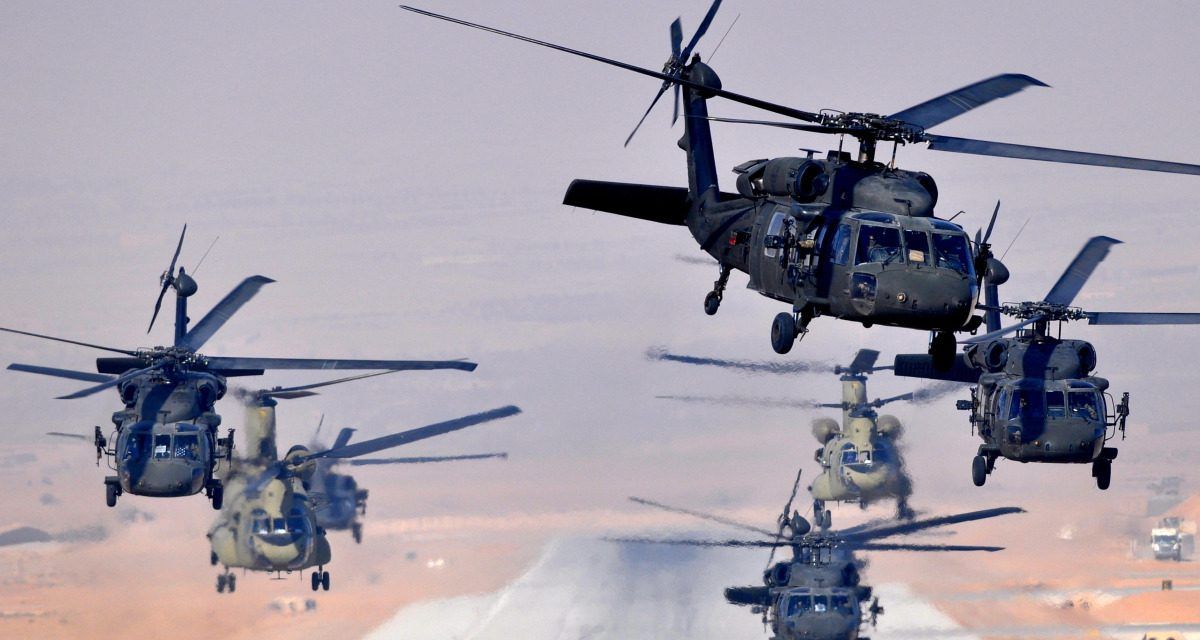
The Army expects to top 1,000,000 total hours in unmanned aviation by April, and sees a need for over 3,000 UAV operators by 2018. The Army plans to recognize the hours-flown milestone in late May with displays in Washington at the Pentagon and the Smithsonian Museum. Meanwhile, fiscal year 2010 should see the addition of about 800 trained operators (UAV pilots). Aside from vastly reducing the risk to military personnel, the Army's UAV program has pushed human error accident and incident rates close to the single-digit mark, according to the military. The military attributes that, at least in part, to the adoption of automated methods employed for takeoff and landing. Currently, roughly 90 percent of the hours flown by unmanned aircraft are done in support of combat, according to Col. Christopher Carlile, director of the U.S. Army Unmanned Aircraft Systems Center of Excellence. He added that the Army is ready to both expand use of unmanned systems and broaden the unmanned aerial system mission set. As for personnel, a joint training installation operated by the Army at Fort Huachuca, Ariz., trains soldiers, sailors and Marines.
John L. Baker, former U.S. Air Force fighter pilot and second AOPA president, passed away March 11. Baker once served as assistant administrator in the FAA's office of general aviation affairs and headed AOPA from 1977 through 1990. At AOPA, he worked for fair distribution of a then $4 billion surplus in the Aviation Trust Fund, eventually influencing how money was distributed to some 3,000 general aviation airports. Baker's time at AOPA saw challenges that arose from the 1978 fatal midair of a Boeing 727 and a Cessna 172 near San Diego, GA issues surrounding the then newly established Terminal Control Area, and advancement of the first bills regarding changes to product liability law. In the words of his successor, Phil Boyer, "He was a highly qualified leader who transformed AOPA from a large flying club to one of the world's most successful membership organizations."
If you're a pilot, do you know what the rudder is for? In this short video, Aviation Safety editor-in-chief Jeb Burnside shows the most basic of flying skills: How to keep a turn coordinated.
The Environmental Protection Agency continues to go through administrative motions suggesting it's serious about removing lead from avgas. Earlier this month, the agency sent a draft endangerment finding to the White House as part of its proposed action to address a petition from Friends of the Earth claiming that lead in avgas represents a public health risk.
The Coalition of Airline Pilots Associations (CAPA) has announced its strong opposition to proposed legislation that would allow use of CVRs to punish pilots for procedural violations. The bill was introduced Feb. 26, by Senator Jim DeMint, R-S.C., in part to "improve air safety" by allowing carriers "limited use" of the information collected by the recorders. Specific language in the bill would allow use of CVR material "to discipline or discharge a pilot" and "to evaluate or monitor the judgment or performance of an individual pilot," among other things. CAPA says the legislation "would turn back the clock on every safety improvement the industry has attained in the last fifteen years of voluntary aviation safety programs." CAPA is calling on members of the Senate to oppose the measure, saying that if it passes, the measure would "irreparably harm our aviation safety system in America." Meanwhile, the NTSB has its own take on the matter.
Boeing Phantom Works has begun construction of a liquid-hydrogen powered high altitude long endurance (HALE) unmanned aerial vehicle designed to fly for more than four days at altitudes up to 65,000 feet, while carrying a 450-pound payload. Key to Phantom Eye is its propulsion system, which after five years of development saw completion of an 80-hour test in an altitude chamber on March 1 (and about which Boeing offered few details). The twin-engine Phantom Eye demonstrator aircraft will have a 150-foot wingspan. Successful testing could make it the precursor of a larger HALE that would carry 2,000 pounds for more than 10 days. A third design, the Phantom Ray, is also expected to evolve from the program and may be the first to fly. The Ray will be a fighter-sized UAV designed as a flying test bed for advanced technologies. Phantom Eye is the evolution of Boeing's earlier piston-powered Condor, an aircraft that set records for altitude and endurance in the late 1980s. Boeing expects first flight of the Phantom Eye UAV to take place early next year.
So many great photos, so little time — a lament that's especially true this week, since we didn't have time to properly pick and format winners before press time. Not to worry — we'll sneak a link into this week's AVwebAudio and run the top five in Monday's edition of AVwebFlash. Enjoy — starting with this shot from Russell A. McDonald of Nappanee, Indiana!
The FAA says there will be 50,000 more GA airplanes and 52,000 more active pilots 20 years from now. Is that a reasonable prediction?Plus: Last week, we asked AVweb readers for their opinions on air traffic controller Glenn Duffy and his son, now infamous as DFW's "Kid Controller." Click through to see how the AVweb community answered.
Wednesday, March 10, 2010, roughly 300 former Women Airforce Service Pilots (WASP) attended a ceremony on Capitol Hill to receive the Congressional Gold Medal for service to their country during World War II. The first minted medal was printed in gold and awarded ceremoniously. It will find its home at the Smithsonian. Surviving members received individual replicas of the medal, made of bronze. More than 60 years since they served their country as the first women trained to fly United States military aircraft, some 800 medals had to be awarded posthumously to surviving family members. The total number of medals awarded was 1,114, representing 1,102 WASP, plus 11 who died in training. One more medal was awarded to Jacqueline Cochran, founder of the WASP, and now deceased. The medal is awarded by Congress and is the highest honor a civilian may receive, along with the Presidential Medal of Freedom.
The Department of Transportation's new rule limiting the time passengers can be held on closed aircraft away from the gate goes into effect April 29, but Delta and JetBlue think construction at JFK may give them good reason to be excused from potential fines. The airlines, which operate a majority of flights at the airport, have petitioned for temporary exemptions from the rule because a four-month-long project at JFK will close the airport's longest of four runways (14,572-foot 13R/31L) as it is widened and repaved in concrete through July. Under normal conditions during peak hours, the FAA estimates the runway's closure may cause delays of about 50 minutes, and those delays will then ripple out to other airports and through affected carriers' schedules. Both Delta and JetBlue have made adjustments to their schedules but fear that may not be enough. Under the new DOT's new rule, an airline could be fined for every passenger held on a closed non-traveling airliner for more than three hours. Translated into dollars, it means that an airline that left passengers on a full Boeing 737 could be subjected to nearly $3.5 million in fines.
By 2030, the general aviation fleet will grow by about 50,000 airplanes and 52,000 active pilots, the FAA forecast this week. The forecast calls for robust growth in the long term and predicts business use of GA aircraft will expand at a faster pace than personal and recreational use. With growth forecast across all sectors -- traffic at the nation's 35 busiest airports is expected to increase by 60 percent -- infrastructure upgrades will need to keep up. "A safe, efficient and vibrant aviation system is vital to our nation's economic health," said Secretary of Transportation Ray LaHood. "We must find long-term solutions that will keep the U.S. aviation industry competitive and moving forward into the future." Light sport aircraft are expected to increase by about 825 aircraft per year through 2013, then taper off to about 335 per year. Sport pilots, who numbered 3,248 at the end of 2009, will increase to 14,100 by 2030, the FAA estimates.The forecast, which comes after a short-term period of slow growth in aviation activity, underscores the need for the Next Generation Air Transportation System (NextGen), as well as continued investment in airport infrastructure projects, the FAA said. "This forecast makes a very strong business case for NextGen," said FAA Administrator Randy Babbitt. "Without NextGen, we won't be able to handle the increased demand for service that this forecast anticipates." Meanwhile, the FAA reauthorization bill, which will provide funding for the agency, continues to be stalled in Congress. Legislators from Tennessee have come under fire this week for trying to de-rail the bill due to a provision that would make it possible for some FedEx workers to unionize.
Statistics that show a high accident rate for homebuilt aircraft may not reveal the complete picture, EAA said this week. The Nall Report, compiled annually by AOPA's Air Safety Foundation, reported last week that in 2008, amateur-built aircraft had an accident rate almost five times the rate of type-certificated aircraft and a fatal accident rate more than seven times higher. "On the surface, the statistics may give one impression of amateur-built accident and fatal-accident rates," said EAA on its Web site. "It takes some digging to get actual totals and comparisons." For example, EAA said, the FAA and NTSB often use different parameters to report the homebuilt aircraft fleet size and the accidents that occur each year. "Our analysis is in part, in response to the Nall Report," EAA spokesman Dick Knapinski told AVweb on Wednesday. "We felt the numbers that were out there could benefit from additional analysis and clarification." EAA posted an analysis by Ron Wanttaja that offers an alternate view of the data.
A Canadian man says an extraordinarily generous charter airline not only saved the holidays of 900 stranded tourists, it also delivered his prized Takamine D Series guitar home after it went astray in the confusion. In late February, Ottawa-based charter operator Go Travel South went out of business leaving 900 customers, including Vince Thompson, scattered around the Caribbean. Kelowna, B.C.-based Flair Airlines, which had flown the Snowbirds south under contract to the charter company, went to pick them up at a cost to the airline of more than $300,000. Flair spokesman Chris Lapointe said rescuing the stranded vacationers was "the right thing to do" but Thompson said saving the guitar was above and beyond that.
We're sorry to report that Paul Bertorelli is being treated for ADHS — advanced delusional hallucination syndrome. We're not sure if he's making progress, but you can be the judge of it by reading his latest post to the AVweb Insider blog. It has something to do with a Piper J-3C.
More training for pilots on advanced simulators could help prevent crashes and save hundreds of lives, according to an analysis by USA Today. Many pilots today are trained on older simulators that can't effectively re-create the real behavior of aircraft during stalls, severe icing, upsets due to wind shear or wake encounters, and other extreme conditions, says a recent NTSB report. Loss of control was a factor in 73 percent of the 433 airline fatalities in the U.S. since 2000. (Note that the fatalities that occurred on Sept. 11, 2001, are not counted in accident statistics, since they resulted from a crime, not an accident.) Newer simulators created with research by the military and NASA are more effective, but there are no federal requirements for pilots to be trained on them.
An NTSB study shows glass cockpit technology has not significantly improved the safety of small light planes, the NTSB said Tuesday, and the board recommended changes, from training to maintenance reporting, to improve the statistics. While data collected between 2002 and 2008 showed fewer total accidents for those aircraft equipped with glass panels, that total came with a higher fatal accident rate and higher total fatal accidents. For the period from 2002-2008, conventionally equipped aircraft suffered 141 total accidents with 23 having a fatal outcome. Glass-equipped aircraft suffered 125 total accidents with 39 having a fatal outcome. But the board's study also found the mission profile for each type of equipment package and the characteristics of the pilot were different between the two platforms. Generally speaking, higher-time pilots were flying longer flights with glass. That said, the NTSB was able to use the data to offer six recommendations voiced at the meeting. Five of those were related to equipment-specific training and one applied directly to testing requirements.
A 23-year-old man who stole a Cirrus SR22 in San Diego last month has pleaded guilty to a felony. Skye Turner was charged with using an airplane without the owner's permission. The court referred him to a new treatment program for mentally ill offenders that provides supervision and custody, the San Diego News Network reported this week. However, if he is not accepted into the program he could be sentenced to 120 days in jail instead. Turner, who is not a pilot but has had some training, stole the keys to the airplane on Feb. 18, just a few hours after a pilot in Austin, Texas, flew his Piper Dakota into a government building. Turner reportedly had been in a dispute with his girlfriend and threatened to crash the SR22 into the ocean, according to SDNN.
Is Your Airplane Draining Your Battery? Concorde Battery's Skip Koss is one of our favorite experts... and possesses a true treasure trove of aviation knowledge--especially when it comes to batteries and electrical systems. Over the course of many years, Skip has seen it all when it comes to the electrical power that keeps todays's aircraft in the sky.
A Predator By Any Other Name... NASA's Ikhana unmanned science and technology development aircraft is a Predator B unmanned aerial system. It was acquired by NASA's Dryden Flight Research Center to support Earth science missions and advanced aeronautical technology development.
North American Jet Charters Operates 10 Eclipse 500 Jets North American Jet Charter Group (NAJet) announced Monday that it has received FAA Part 135 charter approval for operation of its fleet of Eclipse 500 Very Light Jets in a single-pilot charter configuration, the first company to do so.
First Program To Work Directly With The Navy's Test Pilot School Sikorsky Aerospace Services announced Monday that Helicopter Support Incorporated (HSI), a Sikorsky Aerospace Services company, has been chosen to provide a Contractor Logistics Support (CLS) program for U.S. Navy Light Utility Helicopters (LUH) at NAS Patuxent River in Maryland.
Plans Include Fixed-Price Contract And Internal Analysis Of Productions Costs The Defense Department will require a shift to a fixed-price contract in its negotiations with Lockheed Martin for the initial production phase of the F-35 Lightning II joint strike fighter, a defense official said Friday in a briefing at the Pentagon.
Honors The Second President Of AOPA The NBAA Monday honored the memory of aviation industry legend and former AOPA president John Baker, who died last week at his home in Angier, NC.
"Staff Training" Flights Tied Up Two Emergency Services Helos For Several Hours A Democratic Congresswoman from Long Beach requested the use of two Los Angeles County Fire Department helicopters in order to take both her local and D.C. staffs on an aerial tour of the region.
Passenger Was Also Killed In The Accident A Medical Examiner in Tahlequah, Oklahoma has determined that 26-year-old Mark James Mahaney had taken methamphetamine and the generic pain medication propoxyphene prior to a flight which went down about a mile after takeoff from a private residence.
Winners Will Receive Cash Scholarships And The Chance To View A Launch NASA's Exploration Systems Mission Directorate is inviting teams of undergraduate and graduate students throughout the country to participate in the fourth annual Systems Engineering Paper Competition.
Current Testing Includes Tactical And Communications Systems The flight test program with Gripen NG Demonstrator continues according to plan at the Saab facilities in Linkoping, Sweden, Saab said Monday.
Companies Collaborate To Qualify For HAI Safety Accreditation Mountain West Helicopters and Hilton Head South Carolina-based Baldwin Aviation announced Monday that they are collaborating on obtaining IS-BAO registration for the Alpine, Utah flight operation.
Flight Demos, Technology Forums Part Of Planned Oshkosh Activities The innovation and technology of the emerging era of electric-powered aircraft will be a major part of EAA AirVenture Oshkosh 2010, the organization said Monday.
Former Astronaut Says Move Could Be "Disastrous" Two of the men who were part of NASA's lunar program have told the BBC that the Obama Administration's decision to scrap a manned return to the moon could damage the nation's space program.
Problem Arose During Preparations For Fuel Loading Engineers met at NASA's Kennedy Space Center in Florida Monday to discuss options following an issue that arose while venting space shuttle Discovery's aft fuel propellant tanks in preparation for fuel loading during the weekend.
Airline Has Re-evaluated The Number Of Pilots It Will Need American Airlines told its pilots on Friday that it would not need to impose mandatory furloughs in April as it had previously thought. The airline cited a higher than expected attrition rate as the reason 175 pilots would not be let go in two weeks.